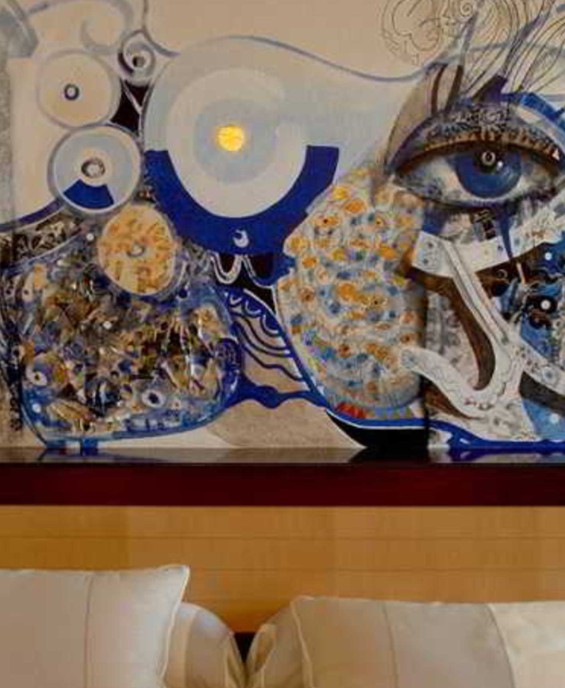
Abstract art invites us to experience creativity in a unique and deeply personal way. Rather than representing recognizable objects or scenes, abstract works focus on elements such as color, movement, texture, and composition. These elements become the language through which artists communicate emotions, ideas, and energy.
In this way, abstract art moves beyond representation and enters the realm of pure expression.
One of the most fascinating aspects of abstract art is the freedom it offers to the viewer. Without a fixed subject or narrative, each person can interpret the artwork through their own experiences, emotions, and imagination.
Two people standing in front of the same abstract painting may perceive completely different meanings. One may feel a sense of movement and energy, while another may experience calmness or reflection. This openness creates a dynamic relationship between the artwork and its audience.

In abstract art, color often becomes the central vehicle of expression. Bold tones can evoke intensity and passion, while softer hues can suggest tranquility or introspection.
Artists carefully balance colors to create harmony, contrast, and visual rhythm. Through these choices, they shape how the viewer emotionally responds to the work.
Another essential element in many abstract artworks is texture. Thick layers of paint, expressive brushstrokes, or palette knife marks reveal the physical gestures of the artist during the creative process.
These textures add depth and movement to the canvas, allowing viewers to sense the energy behind the creation of the work. The surface of the painting becomes a record of the artist’s actions and decisions.
Abstract art encourages us to look beyond literal meaning and engage with art on a sensory and emotional level. Instead of asking “What does this represent?”, viewers are invited to ask “What does this make me feel?”
This shift in perspective transforms art into an open space for imagination and reflection. It allows each viewer to discover their own connection with the work.
Ultimately, abstract art reminds us that creativity does not always need clear definitions. Sometimes its greatest strength lies in its ability to evoke emotion, curiosity, and wonder.